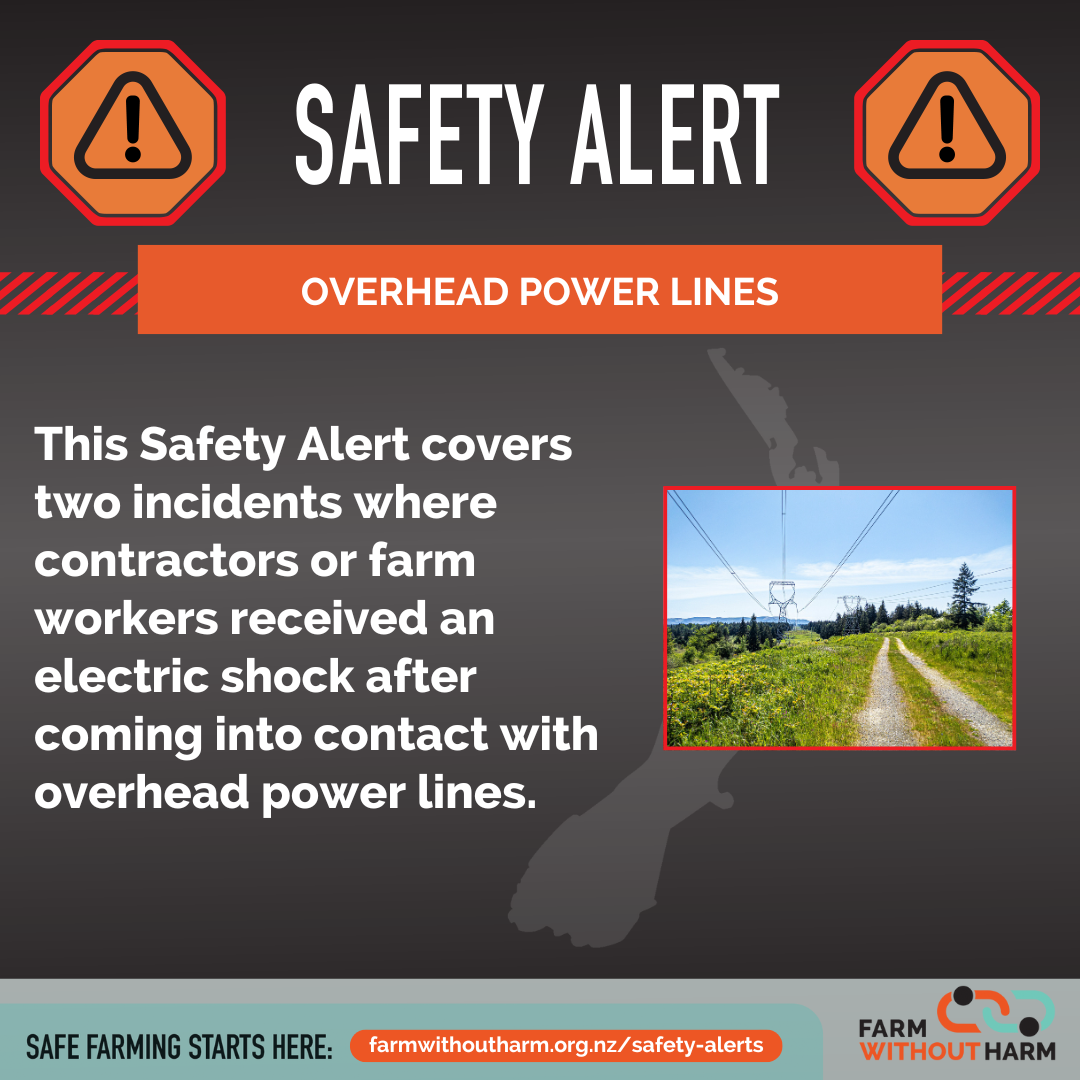
Overhead powerlines

What Happened?

Incident one: A contractor unloaded corn waste into abunker, then drove around to the truck wash area. The bin was raised to washout but the operator didn’t see the overhead power lines. The bin contacted thelines, causing a short to several farms. The operator also received anelectrical shock when exiting the truck.

Incident two: A 400 to 500 metre 3-wire electric fence wasbeing put up on rolling hill country. The operator got to the end of the run,and realised that one reel was two metres short to tie off. To try to bridgethe gap he pulled the wires, which raised the short wire 8-10 metres upwards,making contact with overhead power lines which were out of his field of vision,over from the ridge he was working on. The operator sustained an electricshock.


How should we respond?

Pre-start planning: As with any task, plan the job ahead.Identify the hazards in the area before you start the job and plan to workaround them.

Stop, think and then do. Consider the following points toreduce the risks when working around power lines:

  • See the danger before you start the job. Overhead power lines can become part of the scenery, so it can be easy toforget the power lines are there. LOOK OUT – LOOK UP
  • Keep your distance - when working close tooverhead power lines, it is important to maintain a minimum safe workingdistance of four metres. You don’t even need to contact the lines, as high voltage electricity can arc over to you.
  • Tipping trucks and trailers, mobile augers,front end loaders and livestock trucks (loading and unloading under powerwires) are at risk of coming into contact with power lines.
  • Fencing wire - fence wire flicking upwards andtouching or close to overhead power lines has the potential to injure or kill.If you can’t avoid working near overhead power lines or passing under them, beon your guard.
  • Parking - park machinery or trucks away fromoverhead power lines. Consider putting no parking signs or barriers under linesin yards/around buildings.
Download the Safety Alert PDF