

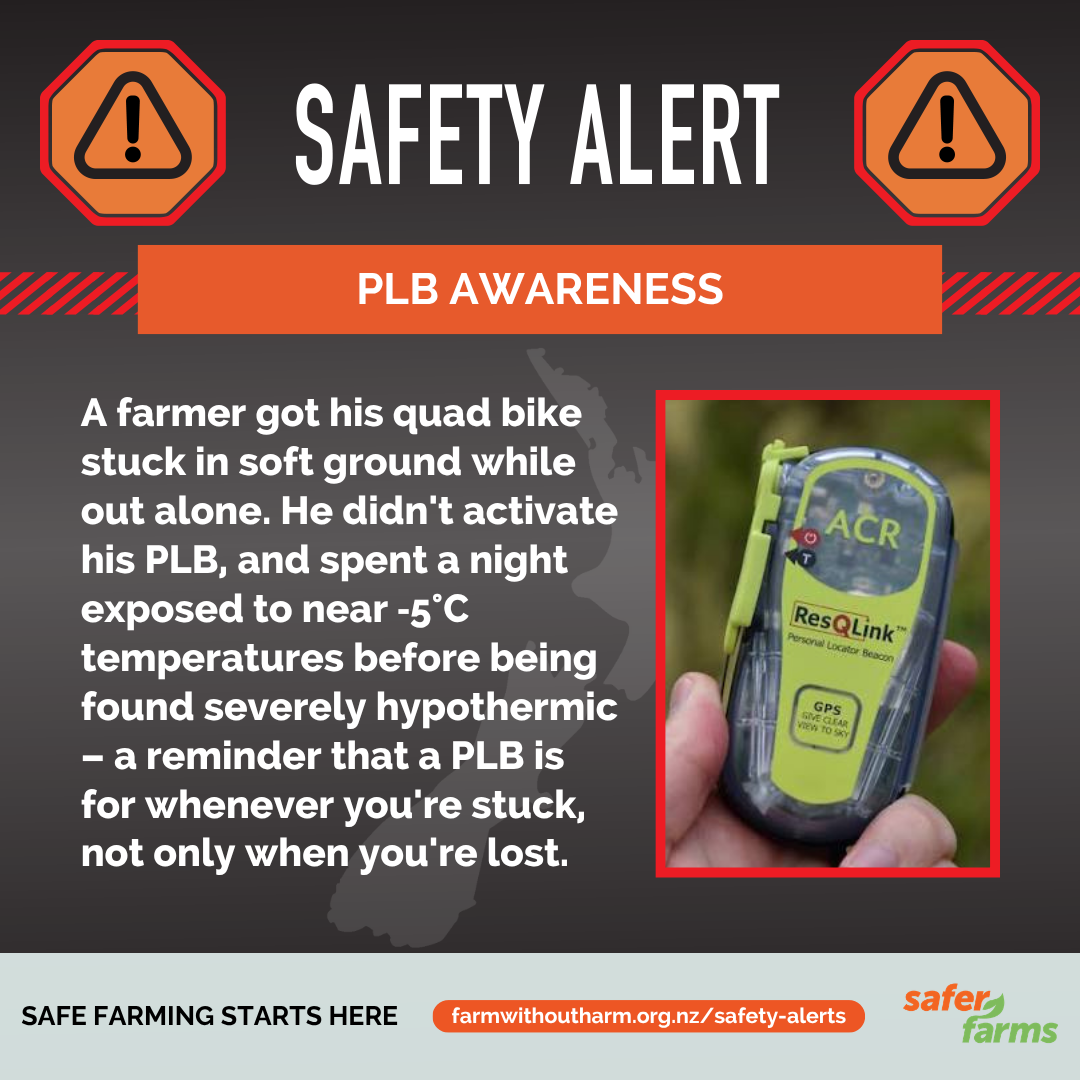
A worker with many decades of experience on a sheep and beef property took his quad bike out to a far paddock on a Saturday morning, searching for a missing dog. A moment of inattention took him off the hard track and the bike got stuck in soft ground. With the farm's managers away, he decided to sort it out himself rather than call for help – he had no phone with him, and had left his radio behind because he wasn't officially working that day.
After walking to the shed and back for a spade and wearing himself out trying to dig the bike free, the evening cold set in, with hypothermia likely reducing his ability to think clearly and make safe decisions. He was carrying a Personal Locator Beacon (PLB) but didn't activate it. With no one expecting him back, it was hours before the alarm was raised. A large search – family, neighbours, Police, and the Eagle helicopter – went through the night as temperatures fell to around -5°C. He was found alive the next morning, severely hypothermic, after a night spent exposed to freezing conditions.
Not wanting to bother anyone stopped him calling for help when the bike first got stuck – at the point it would have made the biggest difference. He later explained, "I didn't pull the PLB because I wasn't lost." It's a common misunderstanding: a PLB isn't only for when you don't know where you are, it's for any situation where you're stuck, injured, or unsure whether you can get home safely. The physical effort of digging out the bike alone also left him exhausted, making him far more vulnerable to the dropping overnight temperatures.
Reminder: The emergency didn't begin when hypothermia set in. It began when the bike became stuck. The earlier help is requested, the more options remain available and the less likely a minor setback becomes a life-threatening event.
