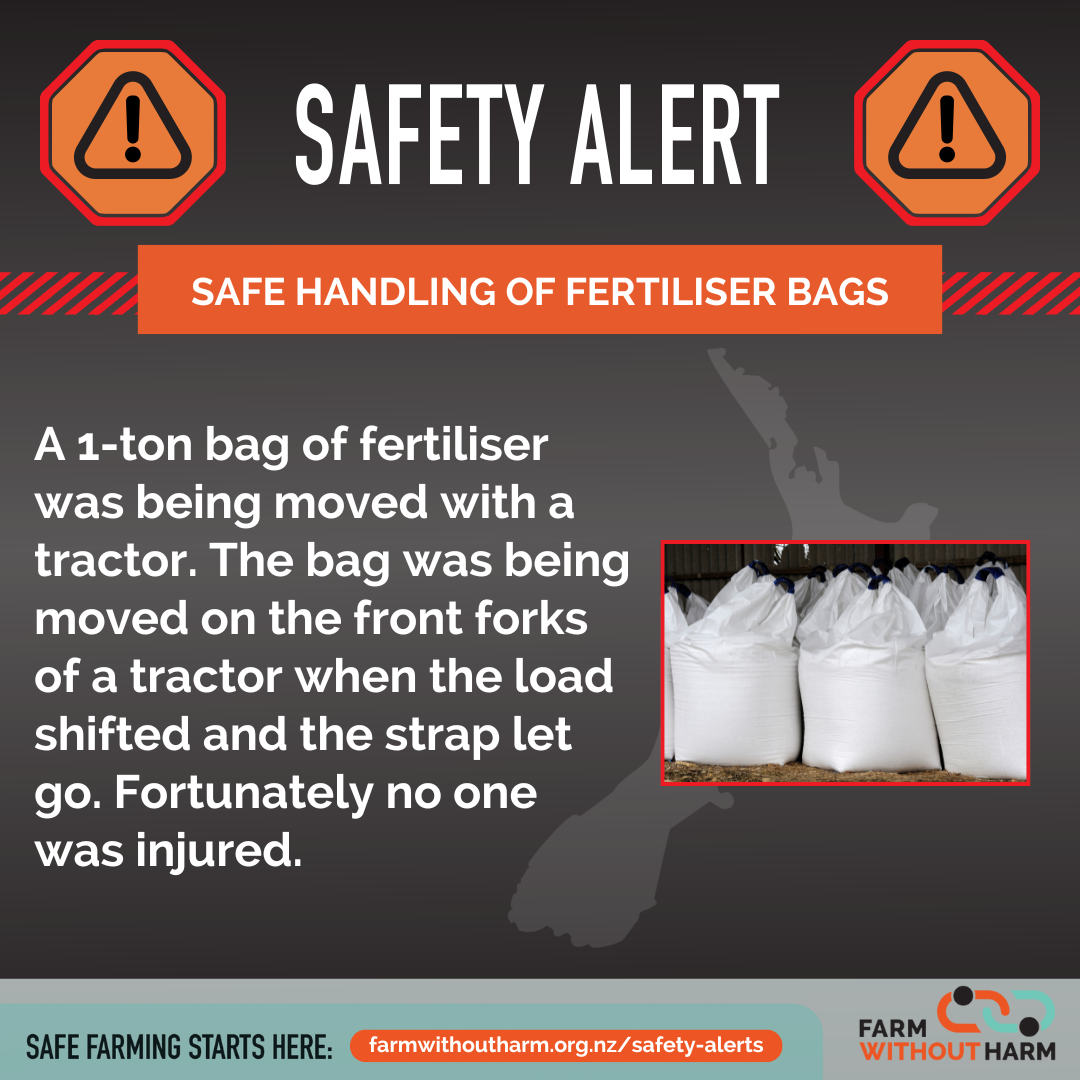
What happened?
A near miss occurred when a one-tonne bag of fertiliser was being moved on the front forks of a tractor and the load shifted, causing one of the lifting straps to fail. The fertiliser company had recently moved from one-tonne reusable fertiliser bags to single-use recyclable ones. Luckily no one was injured.
Key lessons
While the bags have a safety factor of 5:1, the correct procedures always need to be followed while transporting and using them, especially when releasing the load, to manage the risk of strap failure. Farmers should ask for safe handling guides for using bags and ensure that all staff moving them are fully aware of these. Operators must be trained and competent and if a second person is present they must always be in the tractor operator's view during loading and unloading – a five metre exclusion zone is safest. If the tractor operator cannot see the person while carrying out that task, the operator must stop until that person is sighted and the thumbs up to proceed is given. You should never elevate a person on the load or forks.
- Handling fertiliser bags with care and following the guidelines provided by the supplier.
- Keeping it low and slow. With all suspended loads, the bag should be as low to the ground as possible while moving.
- Limiting speed, especially when driving over unsealed surfaces. The speed of the tractor should be no faster than walking speed during loading and unloading. Don't be in the way in case something goes wrong.
- Never work, walk or stand under a suspended load. Ensuring the load is secure and stable before moving off and checking that all is clear in the direction you intend to travel.
- The tractor driver must keep off their mobile phone while loading and unloading.
- Use the right tool for the job – a long handled blade or slasher – to open the bag to keep your hands and arms well clear of the hazard. Specialist bulk bag dispensers can be purchased.
- If something doesn't work out as planned, share your experience. It is important to report all near misses, whether you are following the procedure or not. This enables feedback to be provided to suppliers to help keep people safe.