What happened
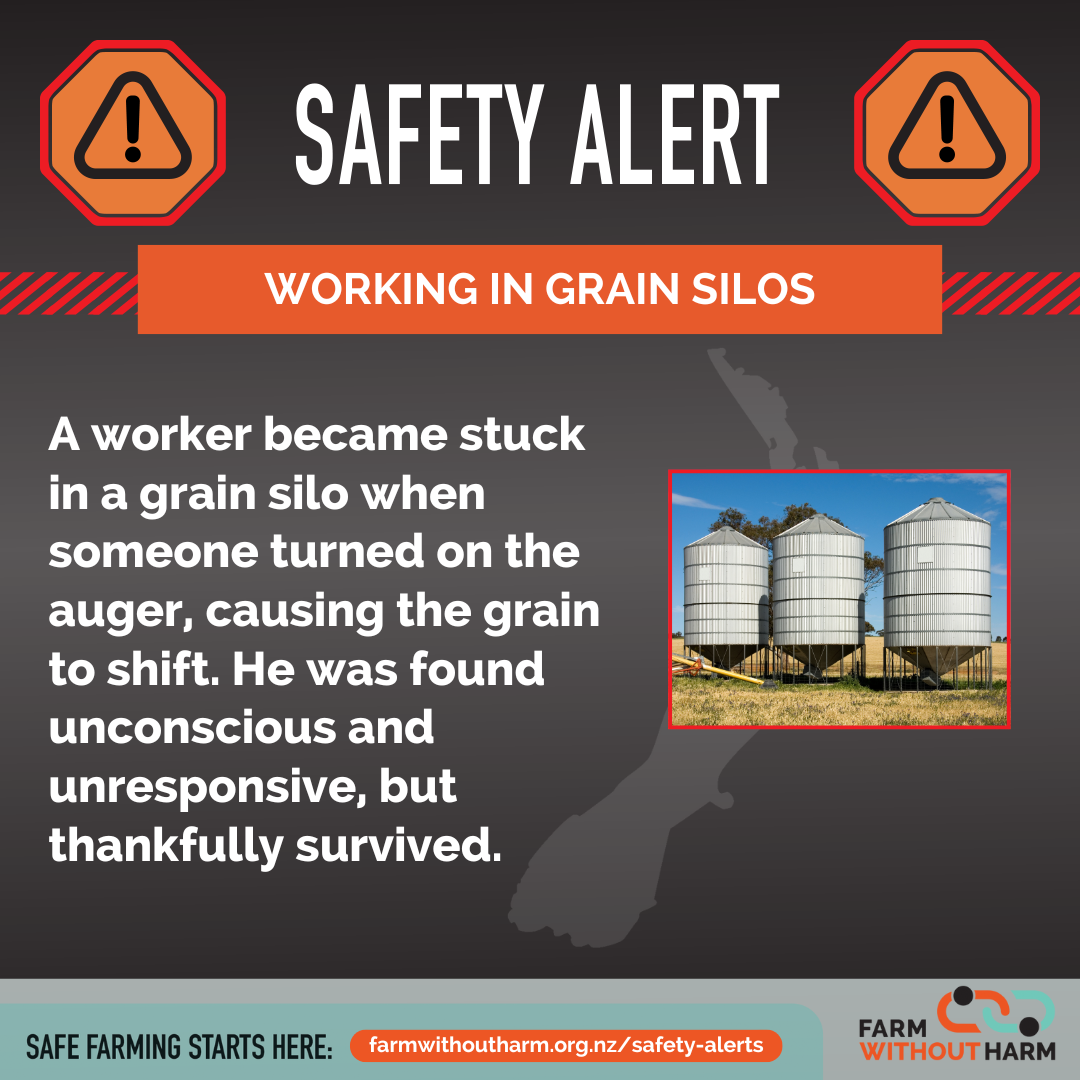
A worker was inside a grain silo when someone turned on the auger, causing the grain to shift. He sank into it almost straight away and became stuck. His workmate ran out to get help, but by the time they returned, the worker had already gone under the grain. He was found unconscious and unresponsive – thankfully he made a full recovery. Some of the rescuers required hospital treatment for breathing difficulties. If things had been only slightly different, this incident could have caused a death.
Key lessons
Silos can be risky places to work. If someone goes in from the ground or climbs in from the top, there's a real chance of being buried, as materials such as grain shift easily, and weak spots can collapse under a person's weight, leaving them stuck or buried. Before climbing into a grain silo, take a moment to look over the job and think about what could go wrong and how you'll keep yourself safe. Anyone doing this work needs to keep things simple and safe.
Unless you have direct controls in place that everyone on farm understands/knows about and are trained to follow, you should call in an expert contractor to work on the silo.
- Avoid entry where possible. Can the job be done another way without needing to climb or go inside the silo? Use tools like sweep augers or vacuums so you don't have to climb inside the silo. Make sure you know what grain is inside, as different types behave differently.
- Treat it as a confined space. Working in silos is considered a confined space, and best practice protocols need to be followed. This includes PPE, training, and conducting a risk assessment before starting work. Make sure the silo is well ventilated – top and bottom hatches must be open.
- Put safety controls in place. Is the power properly locked so no one can switch on the auger or any other gear while you're in there? Never enter the silo when the sweep auger is running.
- Training and competence. Has everyone involved had the right training and guidance? This includes contractors and anyone using the equipment.
- Wear the right PPE. What PPE, such as fall arrest systems, do you need to have on if you are climbing the silo? Check your rescue gear so you know it works when it's needed.
- Never work alone. Always have at least one other person with you, and have someone outside watching and ready to help. Have you discussed how you'll stay in touch and what to do if something goes wrong?