Farm background
Richard and Rachael own a dairy farm in Ngatea, running around 800 cows. Richard was brought up farming, while Rachael was a “townie”. The farm has grown quickly over the past two seasons, from around 360 cows to 650 and then approximately 800 cows. Much of the farm’s setup was originally designed for a smaller operation. The farm team consists of three full-time staff plus two or three casuals at calving time.
The frustration of calf rearing: a shed set up for half the herd
For dairy farmers Richard and Rachael, calving had always been a dreaded time of year. But as their herd grew rapidly over two seasons, the calf shed became increasingly difficult to work in. It had originally been set up for a much smaller herd and was not designed to handle the number of calves moving through it each season.
“That first jump was a steep learning curve… Everything on our farm is set up for half the cows we have.”
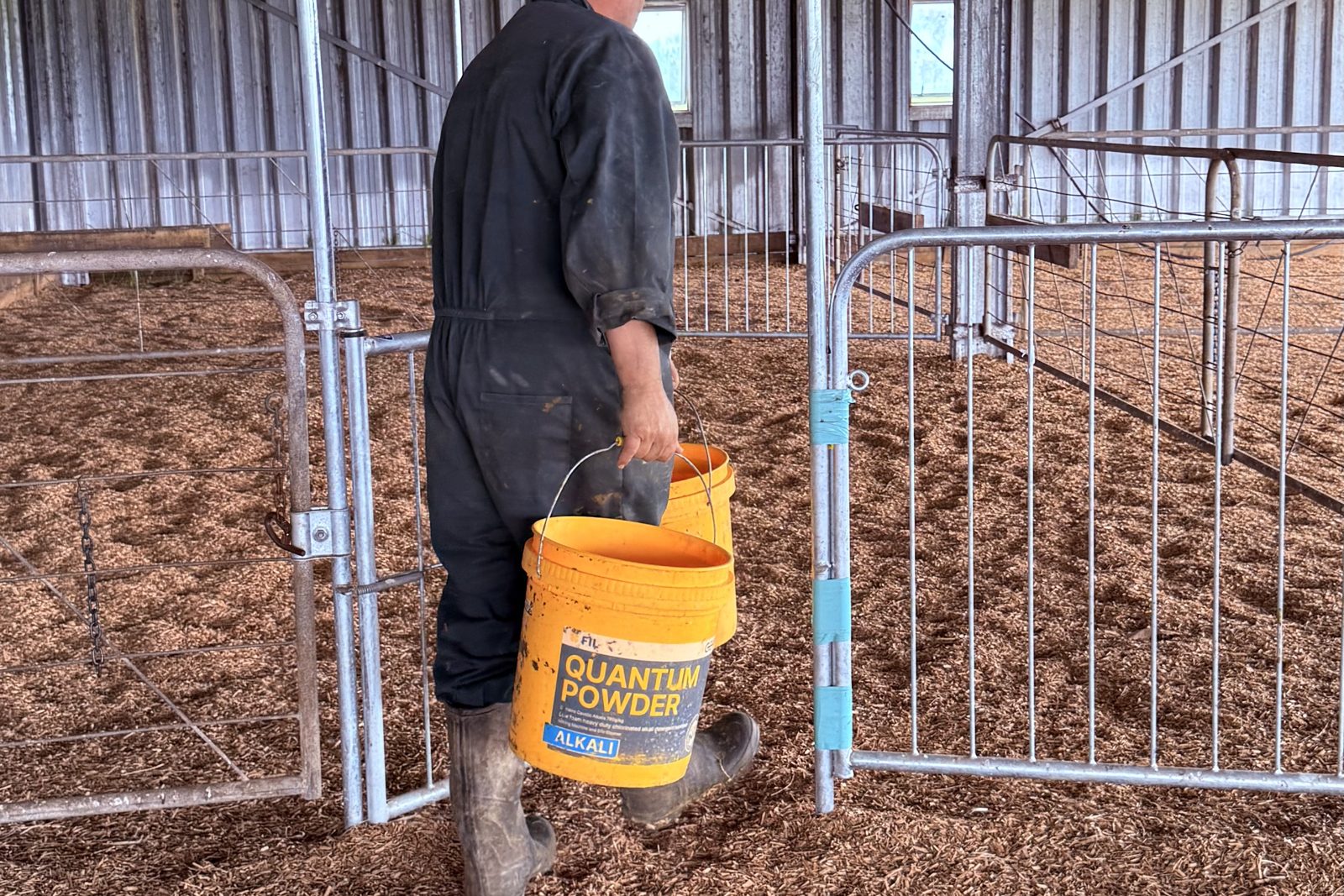
At one stage, Rachael was managing two pens of around 80 calves, while the team struggled to move calves through the shed quickly enough. Carrying milk to the calves at the back of their four-pen-deep shed was particularly frustrating. Each set of double gates had two latches, so Rachael had to put her buckets down, open the gates, walk through, turn around to close them, and then pick the buckets up again. She repeated the process at the next pen.
As the calves learnt who was bringing the milk, they crowded around the gates and made the job even harder.
“Jumping over gates, pushing through gates, pushing through calves with full buckets… Sometimes I would stand in the buckets, sometimes I’d knock them over.”
The shed was designed to be flexible. However, this created further problems. Outside the calving season, it was used as a hay shed, so the internal gates were removed each year. They were not always put back in the most practical order, sometimes leaving gates on the wrong side of the shed.
The latches were another source of frustration. Rachael could release one, start to move through, and then find that it had caught again. With full buckets in her hands and calves pushing from both sides, she had to stop and start over.
Once might have been a minor inconvenience. Repeated dozens of times a day, it meant more lifting, bending and spilled milk. There wasn’t a single injury that prompted the change; instead, it was the physical and mental build-up of doing the same awkward job every day.
“It was just hard. It was really hard... I dread calving every year.”
By the end of the season, everyone was tired and the shed had become a regular source of tension.
“Something had to change...”
Starting with one gate
The Gallagher Easy-Access Calf Pen Gate was developed through DairyNZ and ACC’s Reducing Sprains and Strains project, with input from farmers and health and safety specialists. The spring-loaded, self-closing gate is designed to let people move easily between calf pens while carrying buckets or moving calves. The gates have been available since 2024, after the three-year product development trial was completed. There are two versions: a single and a double gate.
Richard had noticed the Gallagher calf pen gate near the entrance of a Farm Source store and immediately thought it could help.
The owners initially thought the gates could cost around $650 each. If they needed four, five or six, the total cost quickly became hard to justify for a building used intensively during only one part of the year. Soon after, they found there was a smaller option available for around $400 and decided to give one a go.
Rachael was not convinced it would make much difference. Then they installed it.
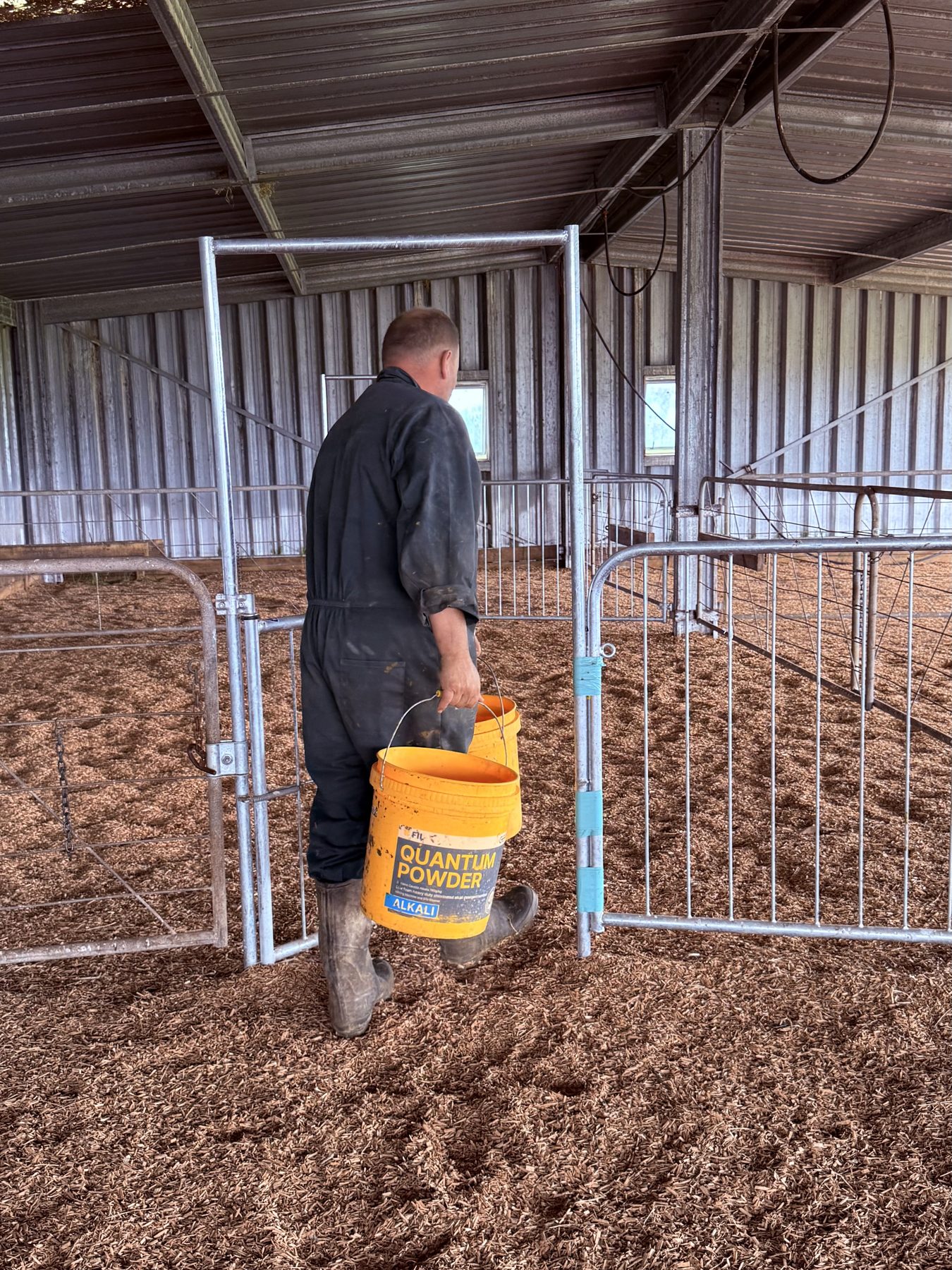
“It basically stopped me having to put the buckets down.”
That was enough to change their minds.
“We should have done this earlier.”
Rather than continuing to trial the idea slowly, they immediately bought more. The farm now owns seven gates.
When Richard first contacted Safer Farms about the initial purchase, he summed up the motivation with a familiar line: “Happy wife, happy life.”
The same physical job, without the unnecessary work
Rachael still carries milk and moves calves. In fact, the farm is now handling more animals than it was under the old set-up. However, the difference is that she no longer has to put the buckets down and pick them up at every pen. She can get her toe under the gate, flick it open and walk through.
“There’s less lifting. It just saves me a lot of time.”
There is less spilled milk too. Rachael is no longer trying to work two overlapping gates while calves push against them from the front and back.
“It’s a lot faster just being able to kick a gate than the way we had it.”
The time saving is useful, but Richard says the reduction in frustration matters just as much.
“It’s an efficiency thing, and just the mental wellbeing of it.”
This calving season has felt smoother. The sense of dread Rachael used to feel when calving was approaching has eased, as has the usual tension around working in the shed. The gates have also helped the team use the existing building better.
“This year we’ve utilised the flow of calves better… We don’t actually need bigger facilities now because we utilise them better.”
Fitting the gates into the existing shed
Richard and Rachael installed the first three gates themselves in around 40 minutes.
“It took like maybe 40 minutes to put the three in. It was pretty quick to do.”
The gates fitted easily into the existing shed, although the team made a few small changes to suit the layout. Because the shed uses ten-foot gates, they bought additional six-foot gates to fill the gaps. They also used temporary fixings, including silage tape, so the gates could be removed when the building returned to hay storage after calving.
The gates only open in one direction, but the team figured out a workaround to keep a gate open while moving calves by removing the spring and leaving it open. These changes were easy enough to make, and the team did not need to rebuild the shed or bring in an installer.
Three of the farm’s seven gates are currently installed. Before next season, the team plans to put another three on the opposite side of the shed, with the seventh gate connecting the existing shed to another calf shed being moved alongside it.
They may add another two gates as the new layout develops. Richard says he would choose wider gates for the busiest routes and single gates where fewer people and calves need to pass through.
Others are taking notice
The gates have made the shed easier for less experienced people to work in. Rachael’s cousin, who had not previously worked on a farm, quickly appreciated being able to move through the pens without handling the double gates.
An experienced contract milker helping on the farm was also impressed. He said he planned to install the gates when he bought a farm of his own.
Other visitors have noticed them. People coming to collect beef calves have asked about the set-up. One visitor planned to tell her family about the gates, and another local farmer was considering buying some.
That response has reinforced Richard and Rachael’s view that farmers need to see the gates working. The benefit is easier to understand when someone can watch a farmer walk through with two full buckets.
Their advice to other farmers
The gates are likely to make the biggest difference where a shed is several pens deep and you are regularly carrying milk or equipment through it.
“For us, because we’re four pens deep, we’ve got to get through the pens all the time.”
They may also help someone managing shoulder or knee problems by reducing repeated squatting, reaching and lifting.
Richard and Rachael recommend starting with one gate in the busiest part of the shed if the cost or fit is uncertain. That lets the person doing the work test it before the farm commits to a wider change.
They also recommend involving the calf rearer in deciding where the gates should go. The person visiting the rural supply store or paying for the equipment may not be the person carrying buckets through the pens every day.
Would they buy them again? Yes. They have already recommended them to others.
Rachael’s review is even simpler.
“Easy gates. That’s what the name should be.”
Incentivising the calf pen gates
Safer Farms promoted the gates during phase one of its ‘Be a Farmer for Longer’ campaign, launched at National Fieldays in June 2026. The campaign aims to help farmers look after their bodies during peak periods so they can continue farming for longer.
Phase one focused on the sprains and strains associated with dairy calving and included a $200 Prezzy Card offer on eligible Gallagher calf pen gates.
The team did not know about the campaign or its $200 Prezzy Card offer when they purchased the first gate. They found the product through the Farm Source display and had already decided to buy more after installing and trialling one.
The incentive still helped.
“I was going to buy more anyway, but it definitely helps. Money’s always a bit tight at the start of calving.”
Against a gate costing around $400, they considered $200 an awesome incentive. They also felt that even $100 could be enough to encourage another farmer to move from considering a gate to actually trying one.
For Rachael, it was great to get money back on something the farm needed.
“Nice to get something back, especially when it makes everything so much easier.”


