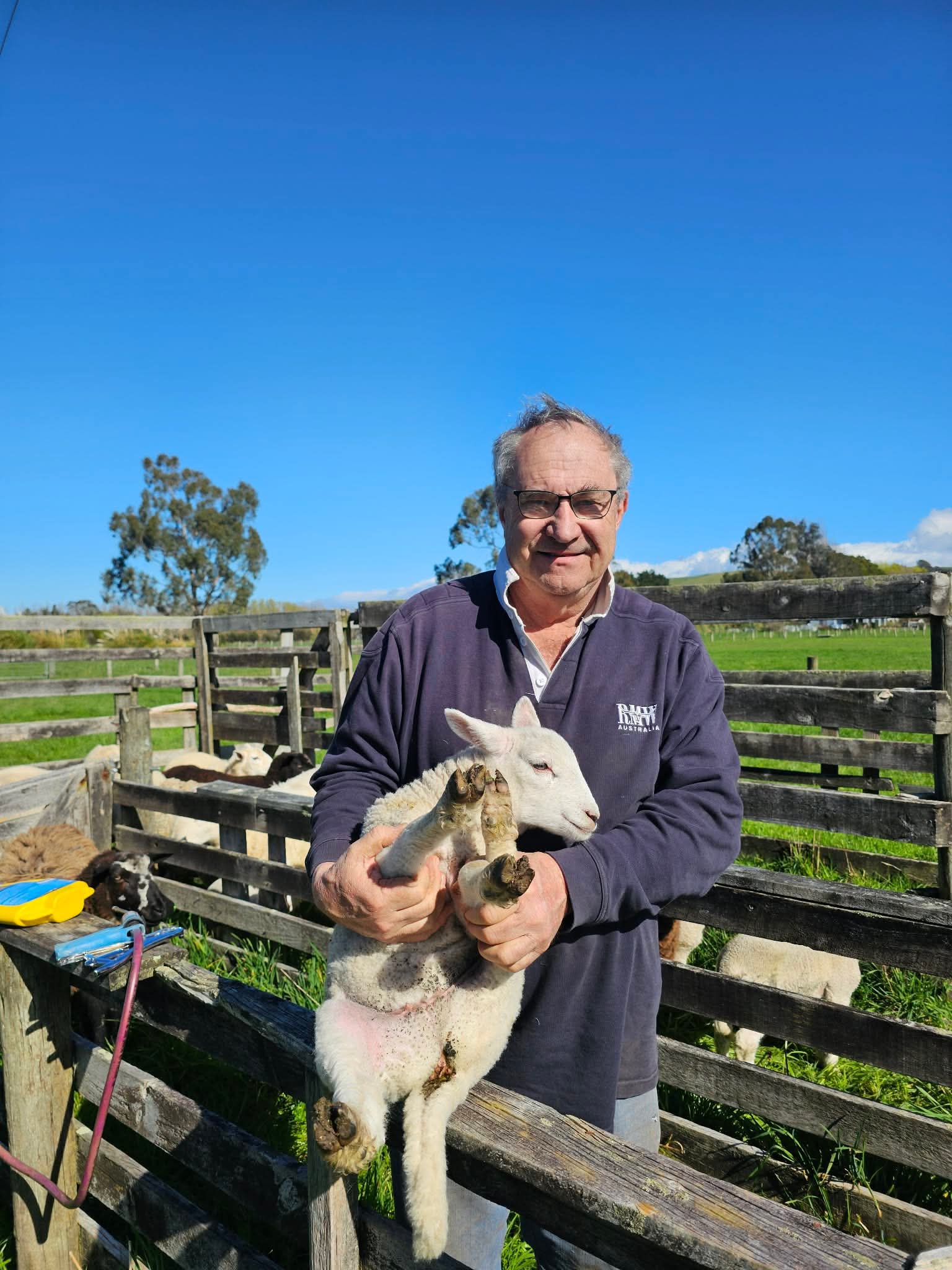
Decades piloting planes has ensured vet and farmer David Hayes is focused on safety – so, after a serious accident while welding on farm, he is sharing his experience so others can learn from it.
The former president of Wairarapa Federated Farmers suffered burns to his legs and underwent a skin graft after welding spatter set his trousers alight.
As well as causing “excruciating pain”, the injury left him immobilised for a spell after surgery and limited his movement for some time.
“If I hadn’t been retired, it would have been a big disruption,” he says.
“I was just stuck and it was pretty sore.”
Hayes grew up on an arable, cattle and sheep farm in South Australia before training as a vet - learning to fly in order to reach cattle stations across the vast territory of North Queensland.
He then worked in the New Zealand dairy industry for over 30 years – retiring last year - as well as being a part-time manager for Hood Aerodrome near his lifestyle block at Rangitumau, near Masterton.
Hayes was injured while doing welding repairs outdoors on a tipper trailer drawbar.
He says he “was really going for it” when he noticed heat on his legs and realised his trousers were alight.
His thick woollen socks had protected his shins but masked the fire until it got above the sock line.
He grabbed the hose but the water took a while to come through, during which time the fire spread. Both his legs were burned but his right leg more severely.
“It was probably seconds but it felt like half a life time waiting for the water to come through the hose. I sat there with the hose running for a long time.
“I don’t even remember strapping it up but I must have. By the third day, I could see it was more than just a painful surface burn so I went to the medical centre.
“The doctor called the regional burns unit at Hutt Hospital to get more advice and I had to keep it covered with a non-stick bandage.
“While awaiting my appointment with the burns unit, the pain became excruciating. The first few steps any time I stood up felt like fiery needles were shooting through my body. Painkillers didn’t make any difference.”
After treatment at the burns unit, doctors decided a graft was the best option.
“They take a thin half layer of skin from your upper thigh.That also leaves a big square area which is painful for a while until it heals up. Then I had to be immobile for a week. I just had to stay in bed.”
What really surprised him was when he shared what had happened with farmer friends, they had suffered similar incidents setting fire to their clothing with welding sparks.
“These fellas all said ‘I’ve done that too, so I realised it’s a bit of thing. I’m not a professional welder, it did not occur to me that I could catch fire from welding – that’s the first thing to be aware of, knowing it could happen.”
Hayes says there are several other factors he wants to highlight, from his experience.
He’s a casual welder – he’s since increased his welding skills and will get professional help when needed.
He usually wears heavy cotton trousers for welding but had a different pair on that day – which he thought were cotton but later found were mostly synthetic fabric. They were also a bit long, creating cuffs, which caught the spatter.
The job was bigger than he expected with the rust causing spatter and the new welder meant he could use it for longer, so he hadn’t taken breaks.
Normally he would have placed a bucket of water close by, but on this occasion he felt the outside hose would be an adequate safety measure. While there was a fire extinguisher in a shed and water trough nearby, both would have taken too long to reach.
He could have disconnected the hose and used the tap directly but it isn’t easy to think clearly in a crisis situation with your clothing on fire.
Hayes’ experience has been used as a Safety Alert by Safer Farms to highlight key safety approaches when welding including:
For a good overall resource see the Welding Safety video here.